
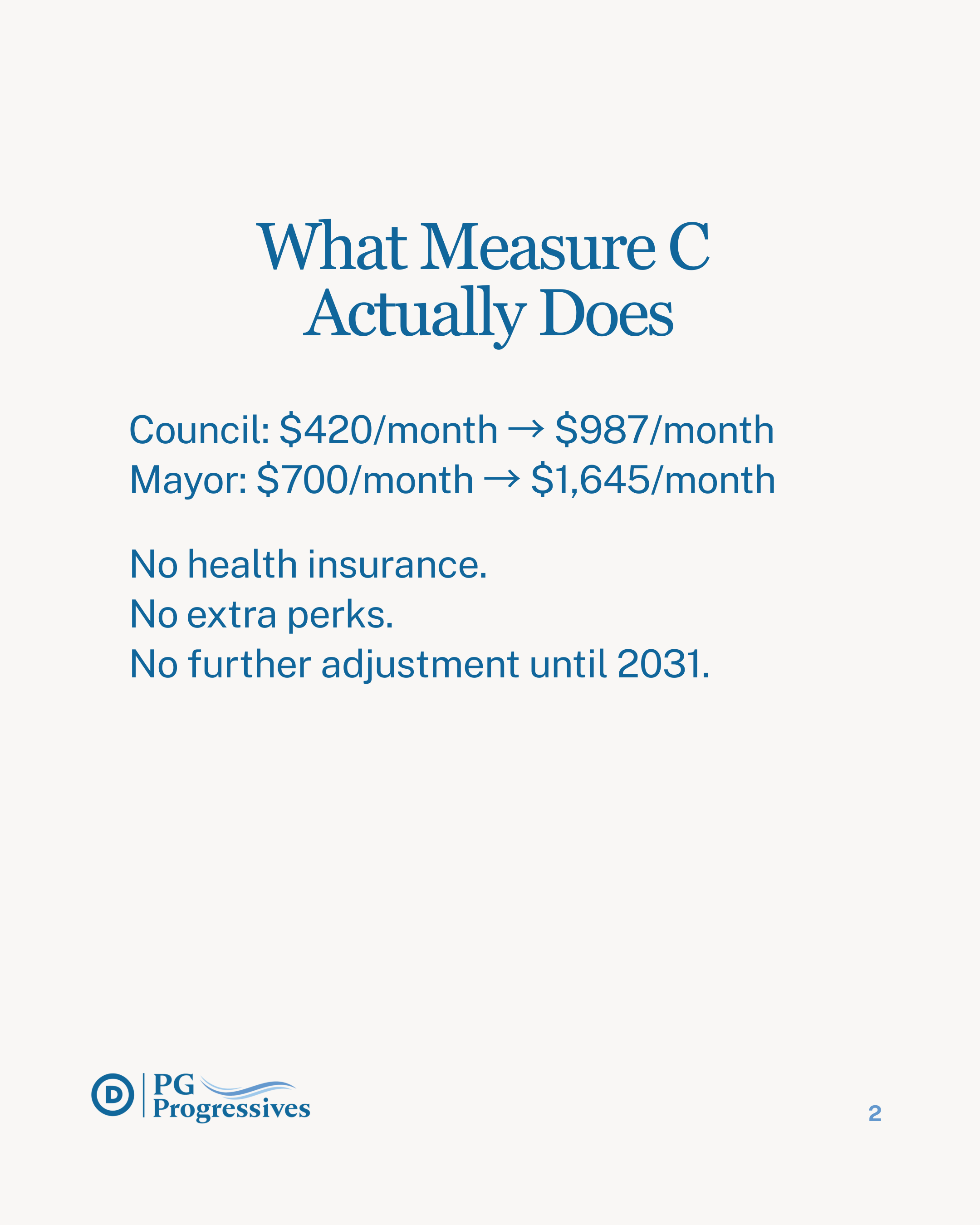
Measure C would update Pacific Grove City Council compensation for the first time since 1998. It would raise council pay from $420 per month to $987 per month and mayor pay from $700 per month to $1,645 per month. It adds no health insurance, no extra perks, and no further adjustment until 2031.
Opponents want voters to focus on the percentage increase and stop there. But that framing leaves out the most important fact: Pacific Grove went 27 years without adjusting council pay at all. What sounds dramatic in a headline is, in reality, a long-delayed catch-up after nearly three decades of inflation and rising costs.
The real question is not whether a percentage sounds large out of context. The real question is whether local public service should remain financially out of reach for many of the people who would otherwise be qualified to serve.
What Measure C Actually Does
Measure C is straightforward.
It would:
Raise council pay from $420 per month to $987 per month
Raise mayor pay from $700 per month to $1,645 per month
Add no health insurance
Add no extra perks
Prohibit any further adjustment until 2031
This is not an open-ended blank check. It is a defined update with clear limits.
Why the Increase Looks So Large
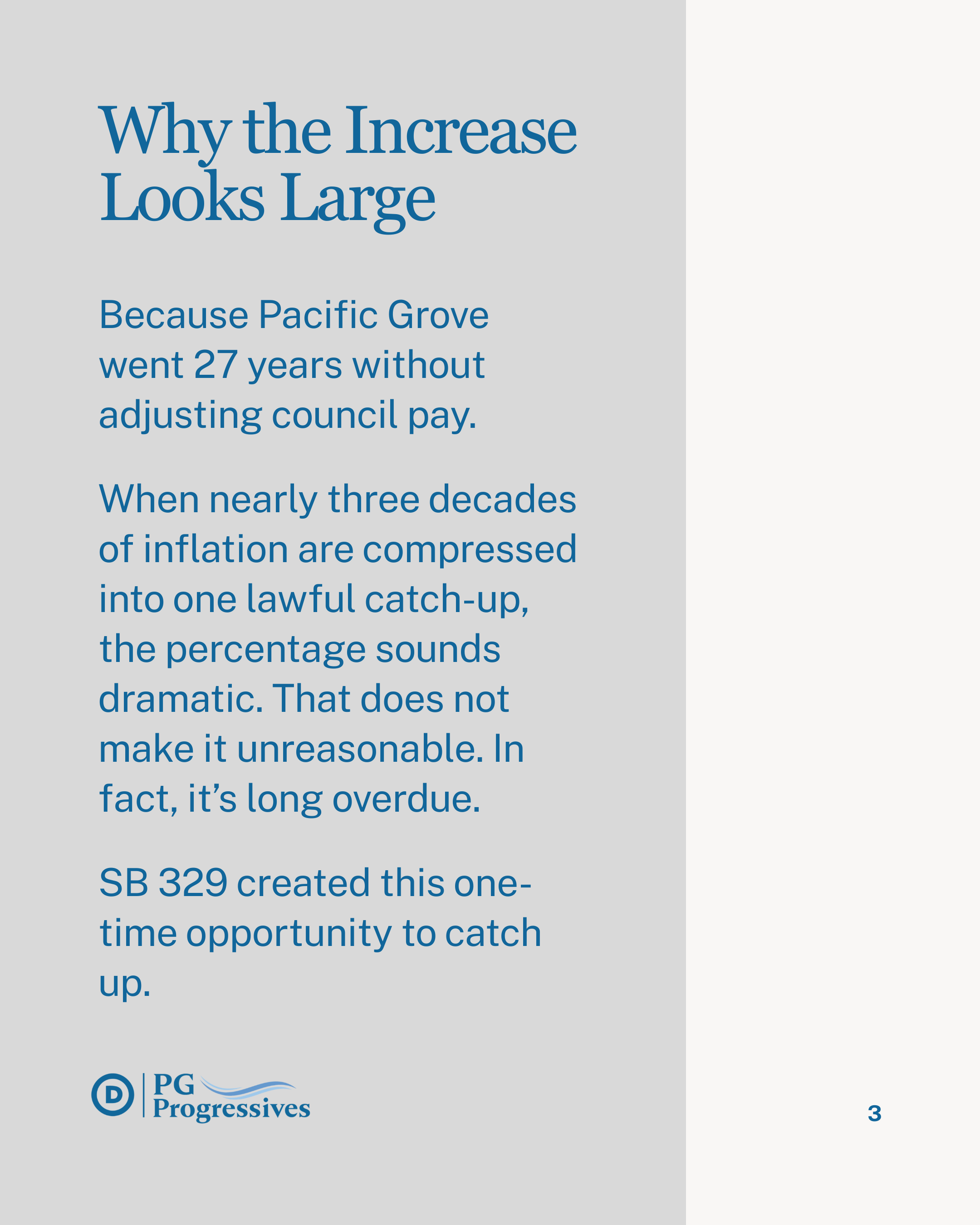
The increase looks large because Pacific Grove left council compensation frozen for 27 years. When nearly three decades of inflation are compressed into a single adjustment, the percentage will always sound dramatic. That does not make it unreasonable. It makes it overdue.
Measure C is a one-time catch-up. Once approved, there can be no further adjustment until 2031.
For years, Pacific Grove has expected councilmembers and mayors to do serious public work under a compensation structure set in another era. Measure C reflects present-day economic reality more than it reflects extravagance.
This Is Not Pay for “Two Meetings a Month”
One of the most misleading talking points in this debate is the idea that council compensation is somehow payment for two evening meetings a month.
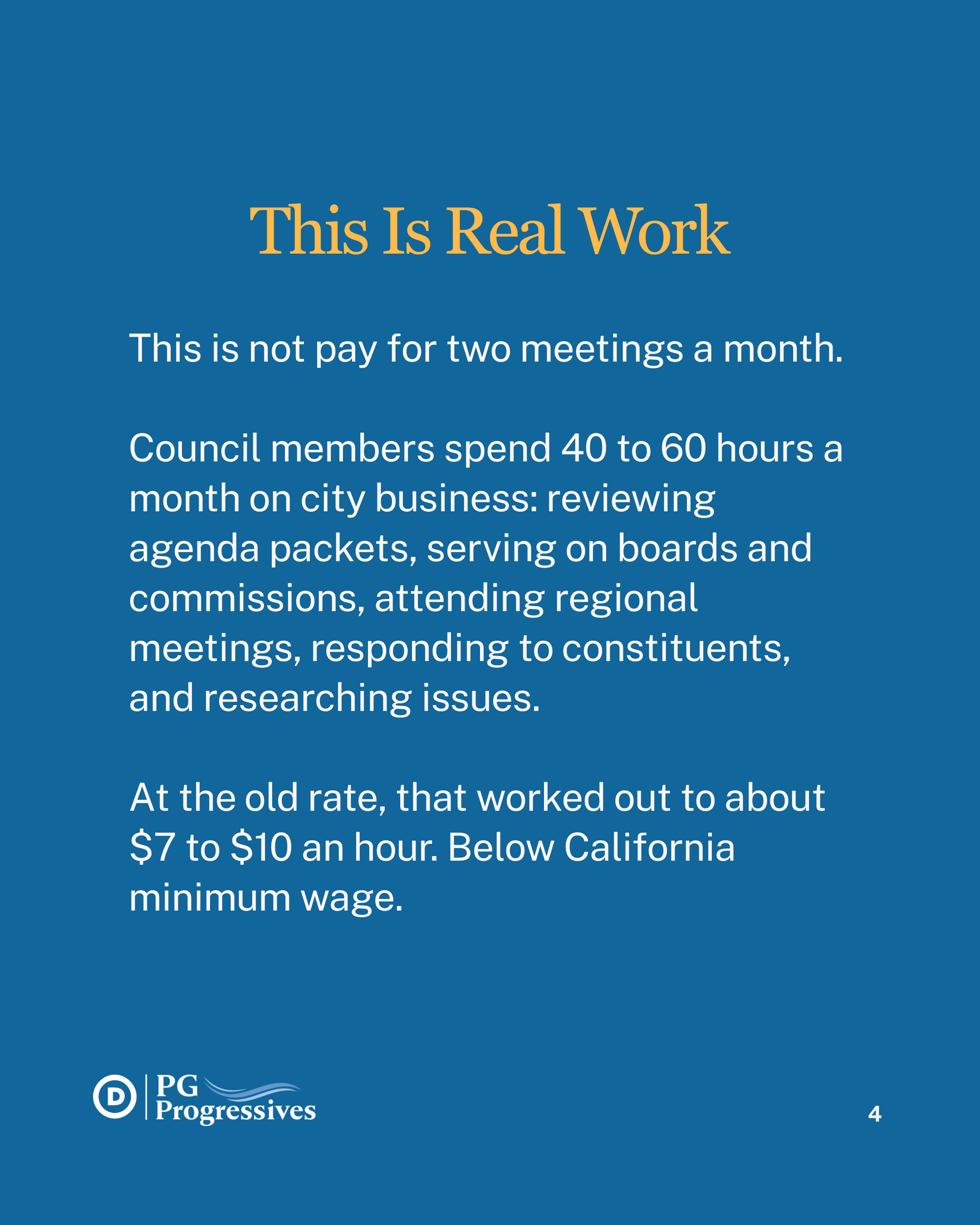
The official argument in favor paints a very different picture. Councilmembers spend an estimated 40 to 60 hours each month on city business. That includes preparing for agenda packets that can run hundreds of pages, serving on boards and commissions, attending regional meetings, conducting research, and working directly with constituents and city staff.
At the old rate of $420 per month, that works out to roughly $7 to $10 an hour, below California's minimum wage.
No one runs for city council to get rich. But it is entirely reasonable to say that people doing real civic work should not be compensated at a level that so clearly undervalues their time.
Public Service Should Be Accessible to Working People
This is the heart of the issue.
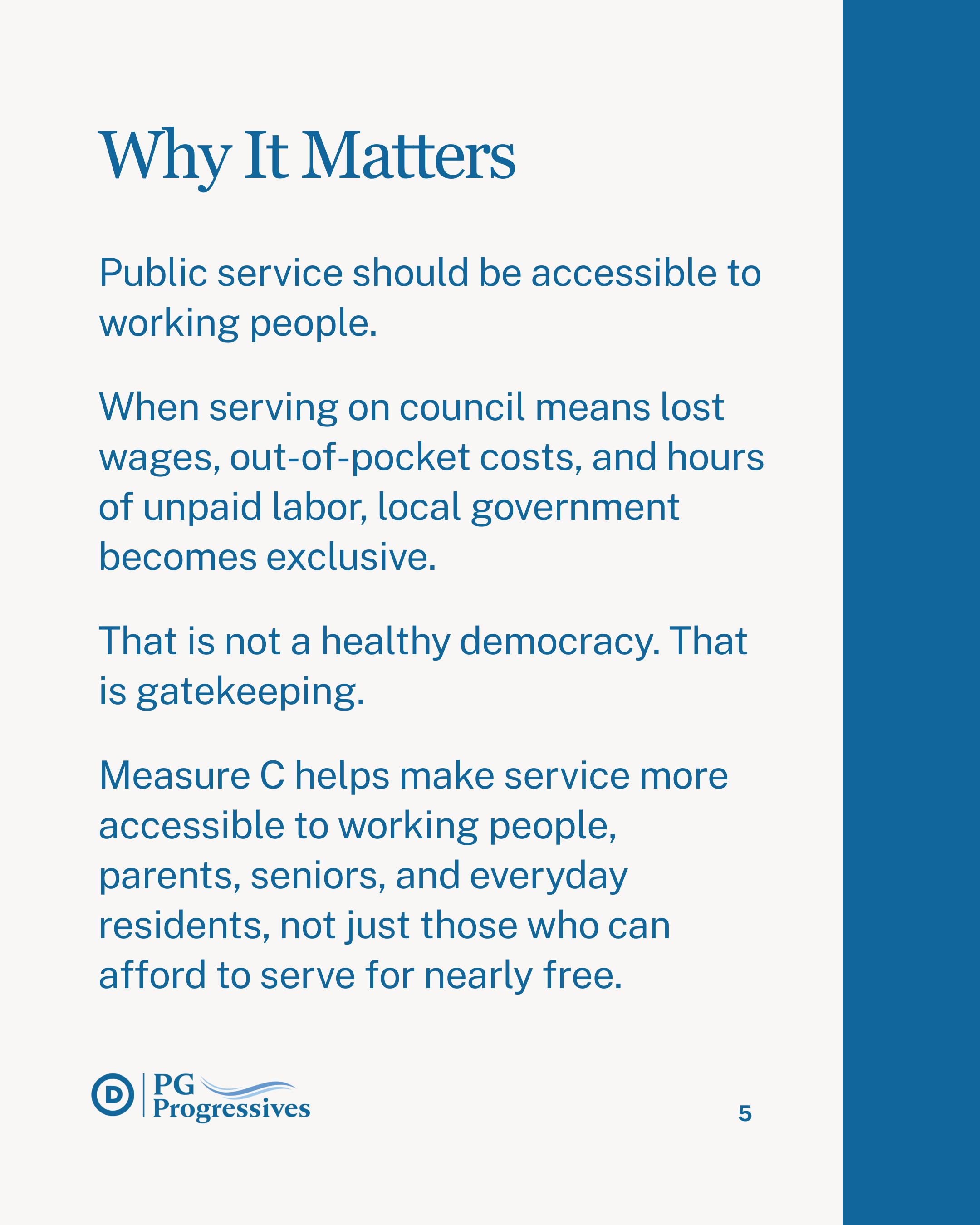
When serving on council means lost wages, out-of-pocket costs, and dozens of hours of labor every month, local government becomes inaccessible to people who cannot afford to absorb that burden. That is not a healthy democracy. It narrows the pool of who can realistically serve.
The official argument in favor says it clearly: public service should be open to anyone who wants to contribute to the community, not just those fortunate enough to take the financial hit without a second thought.
That is why fair compensation matters. It is not about perks or entitlement. It is about access. It is about whether working people, parents, seniors, and everyday residents can realistically consider service without being punished financially for saying yes.
A representative city council should not be reserved for the wealthy and retired.
How Pacific Grove Compares
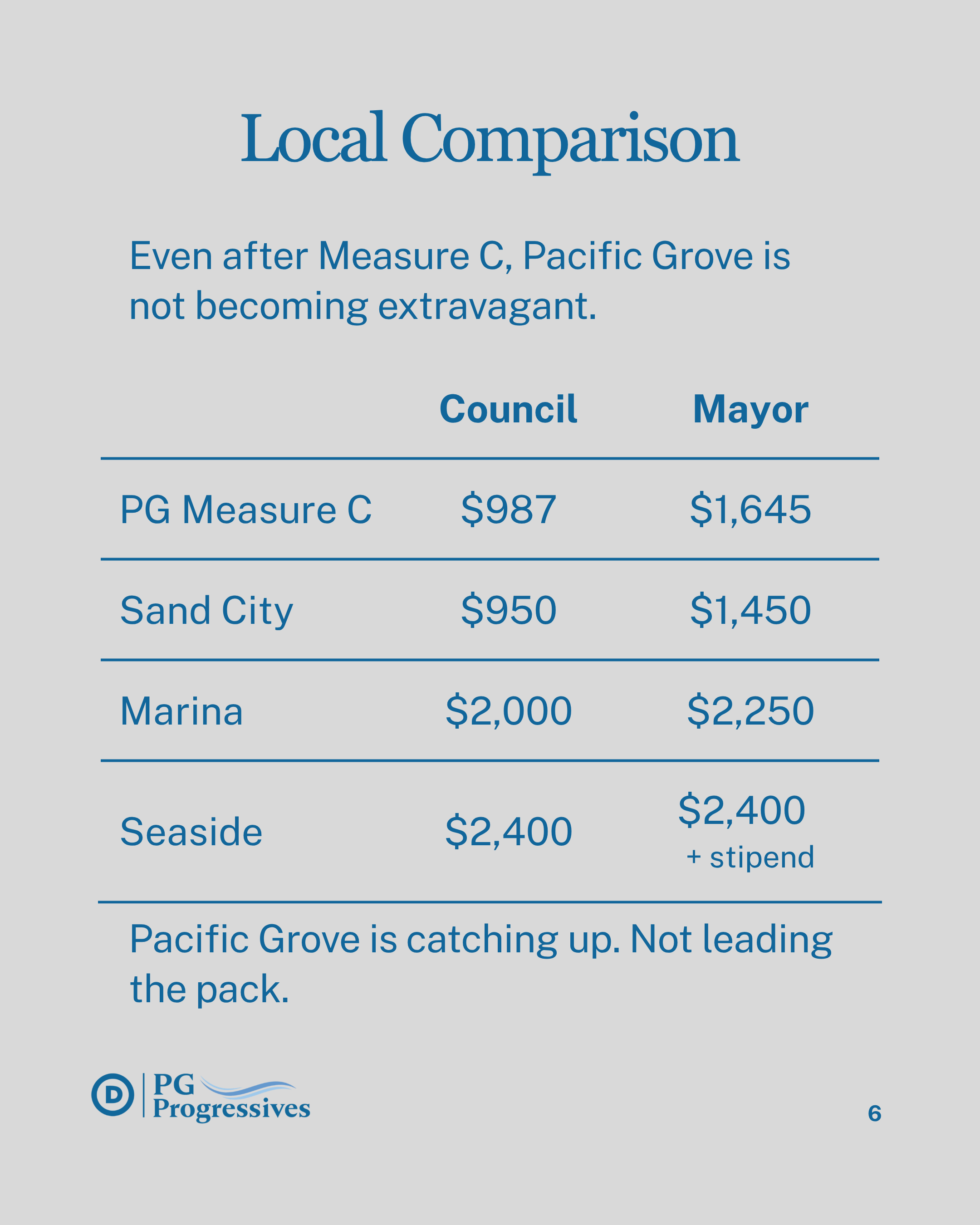
Even after Measure C, Pacific Grove is not becoming extravagant.
Nearby cities have already adopted compensation levels that meet or exceed Pacific Grove’s proposed update, and several provide higher mayoral compensation as well. The broader point is simple: Measure C is not making Pacific Grove lavish. It is bringing Pacific Grove closer to modern norms after nearly three decades without an adjustment.
Why This Ended Up on the Ballot
There is also an important point about how Measure C ended up on the ballot in the first place.
According to the rebuttal to the argument against Measure C, the council acted under state law and the City Charter. The rebuttal also states that the election expense arises from the referendum process that forced the issue onto the ballot.
In other words, the outrageous part is not that Pacific Grove finally addressed a 27-year-old compensation structure. The outrageous part is that a straightforward, overdue adjustment has been dragged into an unnecessary political fight.
Read the Official Materials
For readers who want to review the official materials directly, the City of Pacific Grove has published the ballot summary, the arguments for and against Measure C, and the rebuttals.
You can link here:
The Bottom Line
Measure C is not about lavish perks. It is not about excess. It is about updating council pay for the first time since 1998 and ensuring public services remain accessible to more than just the few wealthy enough to do them for nearly free.
Council service involves real time, real sacrifice, and real work. Fair compensation matters because democratic access matters.
Measure C has been endorsed by the Monterey County Democratic Central Committee, reinforcing what the facts already show: this is a sensible and overdue update.
A reasonable raise after 27 years is not a scandal.
It is overdue.


