

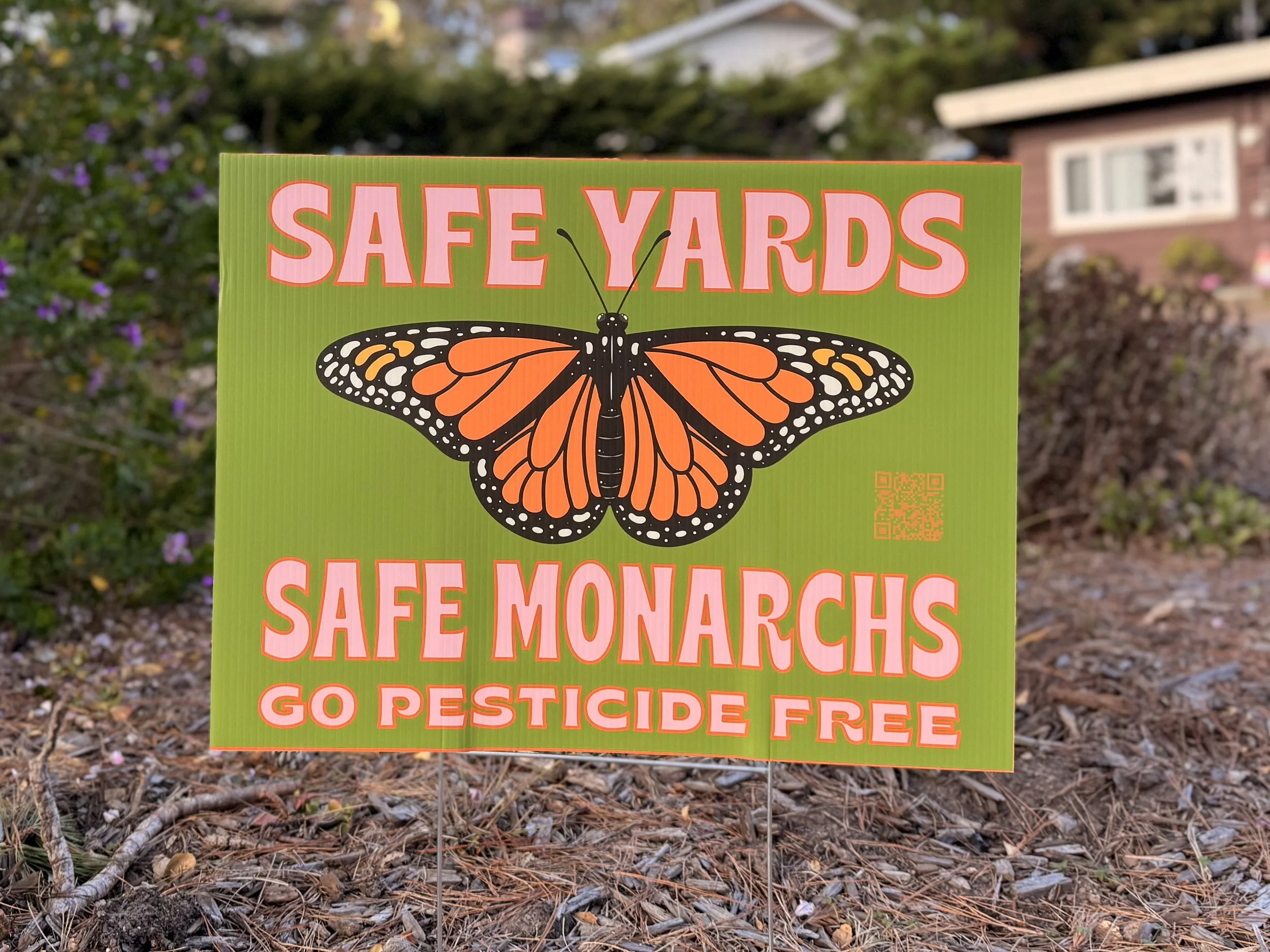
Safe Yards. Safe Monarchs.
Go Pesticide-Free.
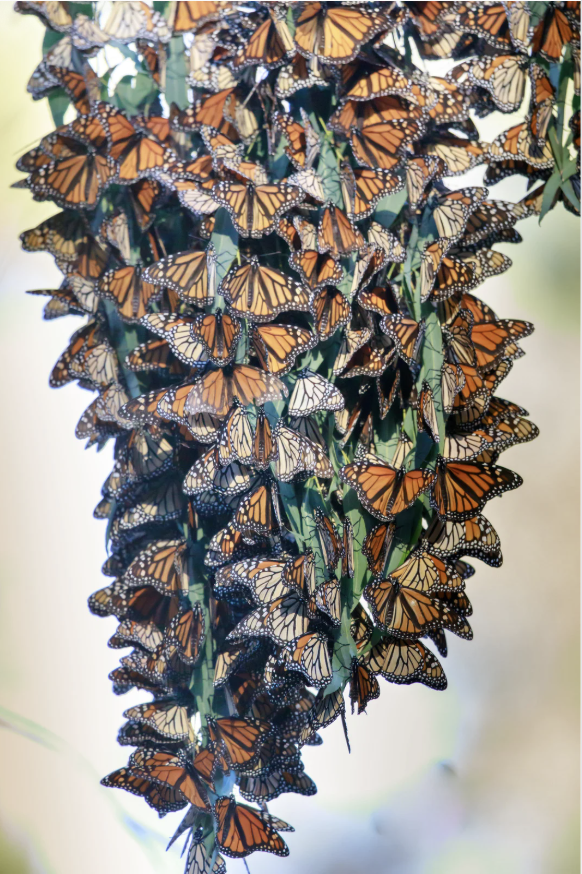
Each fall, western monarch butterflies migrate to Pacific Grove to overwinter.
Western monarchs have declined by more than 99% from the millions recorded in the 1980s.
In 2025, only 12,260 were counted across western overwintering sites. Just 188 were counted at the Pacific Grove Monarch Sanctuary.
In January 2024, hundreds of monarchs were found dead or dying near the sanctuary. A peer-reviewed study found multiple pesticide residues in every butterfly tested and concluded that pyrethroid insecticides likely caused the mass mortality event.
You can make a difference. Every yard can be a safe stop on their journey.
Get your
Yard Sign.
Show your commitment to protecting Pacific Grove’s monarchs.
When Monarchs Are in Pacific Grove
Arrive: Mid-October
Peak Season: November–January
Depart: Usually February, with timing varying by weather and year.
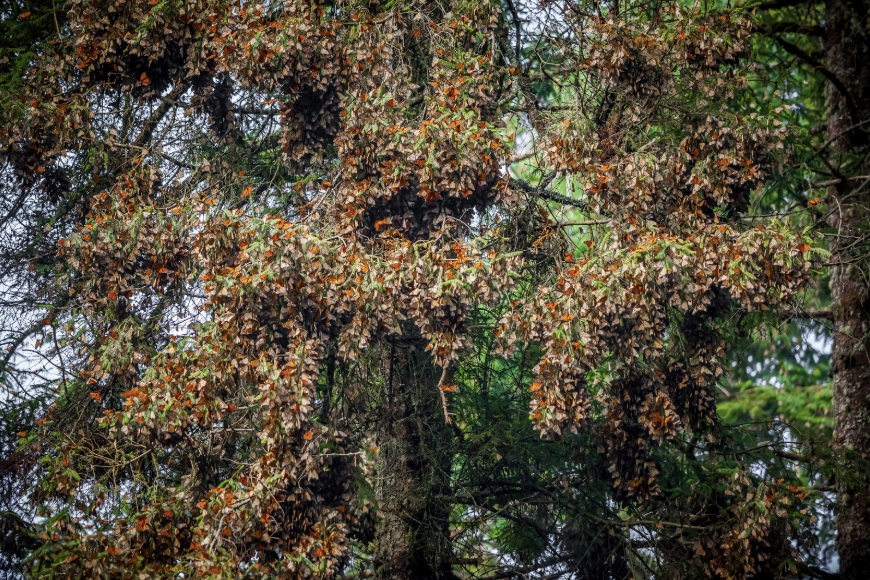
During this time, monarchs cluster in sheltered trees for protection from wind, rain, and cold. On warmer days, they may leave their clusters to drink nectar and water.
Monarchs generally do not breed while overwintering, so Pacific Grove yards should provide nectar plants, not milkweed.
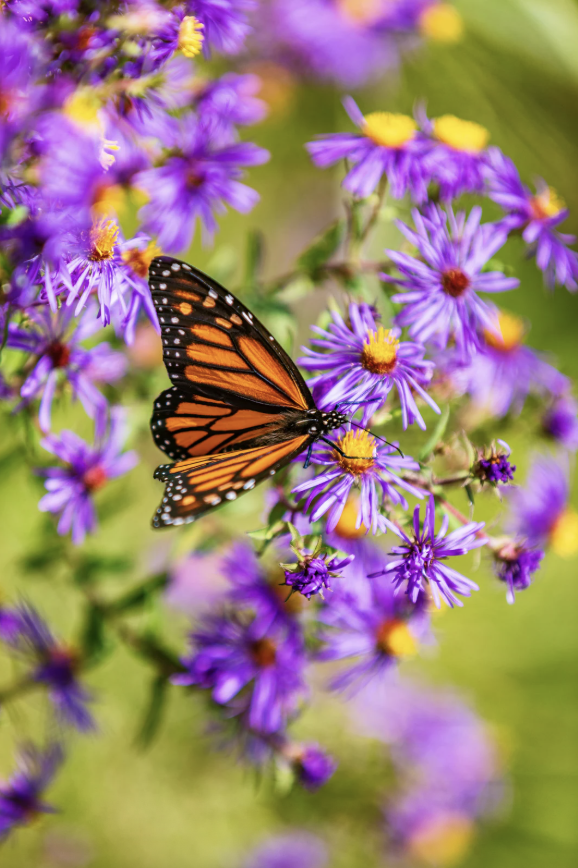
Native Seasonal Nectar Plants for Pacific Grove
Choose plants that are locally native and provide overlapping blooms from fall through early spring.
Fall and Early-Winter Nectar
California goldenrod (Solidago velutina ssp. californica): An important late-season nectar source. Plant in sun and allow room to spread.
California aster (Corethrogyne filaginifolia): A late-blooming, drought-tolerant perennial for sunny locations.
California fuchsia (Epilobium canum): Thrives in sunny, dry locations and provides valuable late-summer and fall nectar.
Seaside daisy (Erigeron glaucus): Well suited to coastal gardens and may bloom for an extended period.
Coastal gumplant (Grindelia stricta): Tolerates coastal wind, sand, and salt and can bloom into fall.
Coastal sand verbena (Abronia latifolia): Well suited to sandy coastal soil and may bloom for much of the year.
Winter and Early-Spring Nectar
Manzanita (Arctostaphylos species): Provides valuable winter flowers. Choose a locally appropriate variety and provide excellent drainage.
Pink-flowering currant (Ribes sanguineum): Blooms from late winter into spring and grows in part sun or light shade.
Chaparral currant (Ribes indecorum): A winter-blooming shrub suited to dry, partly shaded locations.
Fuchsia-flowered gooseberry (Ribes speciosum): Produces striking winter and spring flowers. Its thorns make it best suited for areas away from paths.
Blueblossom ceanothus (Ceanothus thyrsiflorus): A locally native shrub that provides abundant flowers from late winter into spring.
Planting Tip
When space allows, plant several of the same species together. Groups are easier for pollinators to find and provide more nectar in one location.
Plan and Find Plants
Before buying, confirm that the species is native to your Pacific Grove location and ask whether it was grown without systemic insecticides.
Keep Milkweed Away from the Coast
Monarch caterpillars need milkweed, but overwintering monarchs in Pacific Grove need nectar plants.
Milkweed generally does not grow naturally along the Central California coast. Planting it within five miles of the coast may encourage winter breeding and disrupt the monarchs’ migratory cycle.
In Pacific Grove, plant locally native fall, winter, and early-spring nectar plants instead of milkweed.

Pesticide-Free Yard Practices
Start with Nonchemical Solutions
Pull or hoe weeds and cover bare soil with mulch.
Remove pests by hand, prune affected plant parts, or use a stream of water when appropriate.
Tolerate minor plant damage whenever possible.
Avoid “all-in-one,” broad-spectrum, and systemic pesticides.
Do not spray flowers or places where butterflies feed, drink, or rest.
If treatment is necessary, identify the pest first and consult UC Integrated Pest Management for the least-toxic, most targeted option.
Choose Pollinator-Safer Plants
Packaging with flowers, butterflies, or “organic” language does not guarantee that a plant is pesticide-free.
Before buying, ask:
“Was this plant treated with systemic insecticides, including neonicotinoids?”
If the nursery cannot answer, choose a nursery specializing in locally native, pesticide-free plants.
Protect Trees and Shelter
Monarchs depend on trees and shrubs for protection from wind, rain, and cold. Avoid major pruning or tree removal while monarchs are present, generally from October through February.
Pacific Grove has additional protections for trees in or within 100 yards of designated monarch sanctuaries. Pruning or removal of these monarch habitat trees is prohibited from October through April. A permit is required for work on these trees outside that period as well.
Review Pacific Grove’s monarch tree protections and contact the City before beginning tree work near an overwintering site.
Let Healthy Oaks Recover Naturally
Healthy oaks generally tolerate substantial California oakworm defoliation and grow new leaves.
Natural predators, parasites, and diseases help control oakworm populations.
Treatment is usually unnecessary.
Insecticides can harm monarchs, other caterpillars, pollinators, and beneficial insects.
Be a Good Neighbor:
Protect mature trees and shrubs that provide shelter from wind, rain, and cold.
Before pruning or removing trees near an overwintering site, check Pacific Grove’s tree protections and permit requirements.
Tell your landscaper: “Do not apply insecticides, herbicides, or other pesticide sprays without my approval.”
Share these practices with neighbors, property managers, businesses, and landscaping companies.