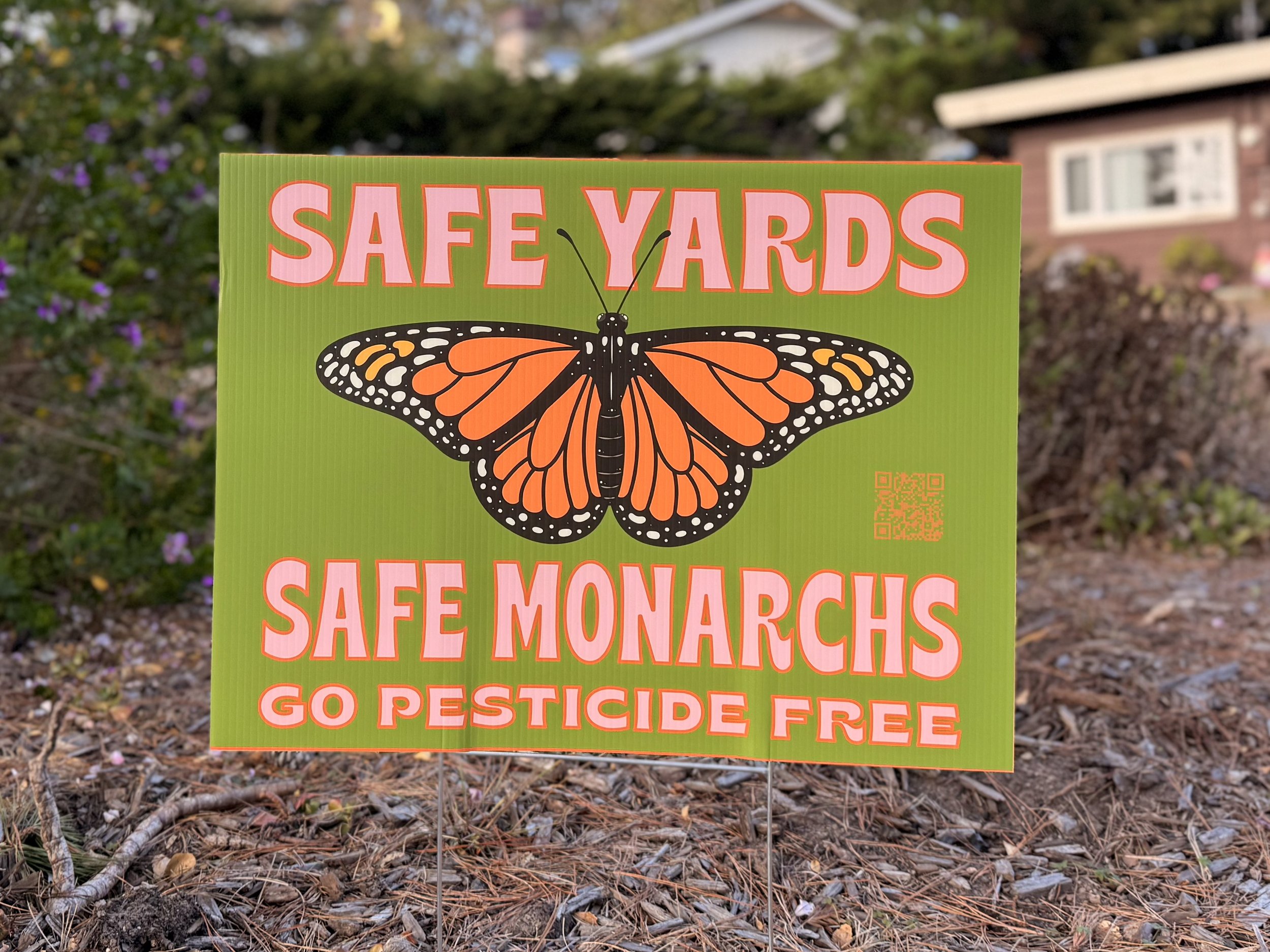
Every fall, thousands of monarch butterflies migrate to Pacific Grove to rest through the winter. But, in January 2024, 90% of our monarchs went missing, and testing showed pesticide exposure. How to help: Every yard in Pacific Grove can help. Your garden, patio, or curb strip can be a safe stop on their journey.
Monarch Count: Nov 2023 vs Nov 2025
Here’s a snapshot from the Pacific Grove Museum of Natural History:
Nov 2023 — Official Monarch Count: 7,604
Nov 2025 — Official Monarch Count:97
Whatever the number, our mission stays the same: make every yard a safe stop.
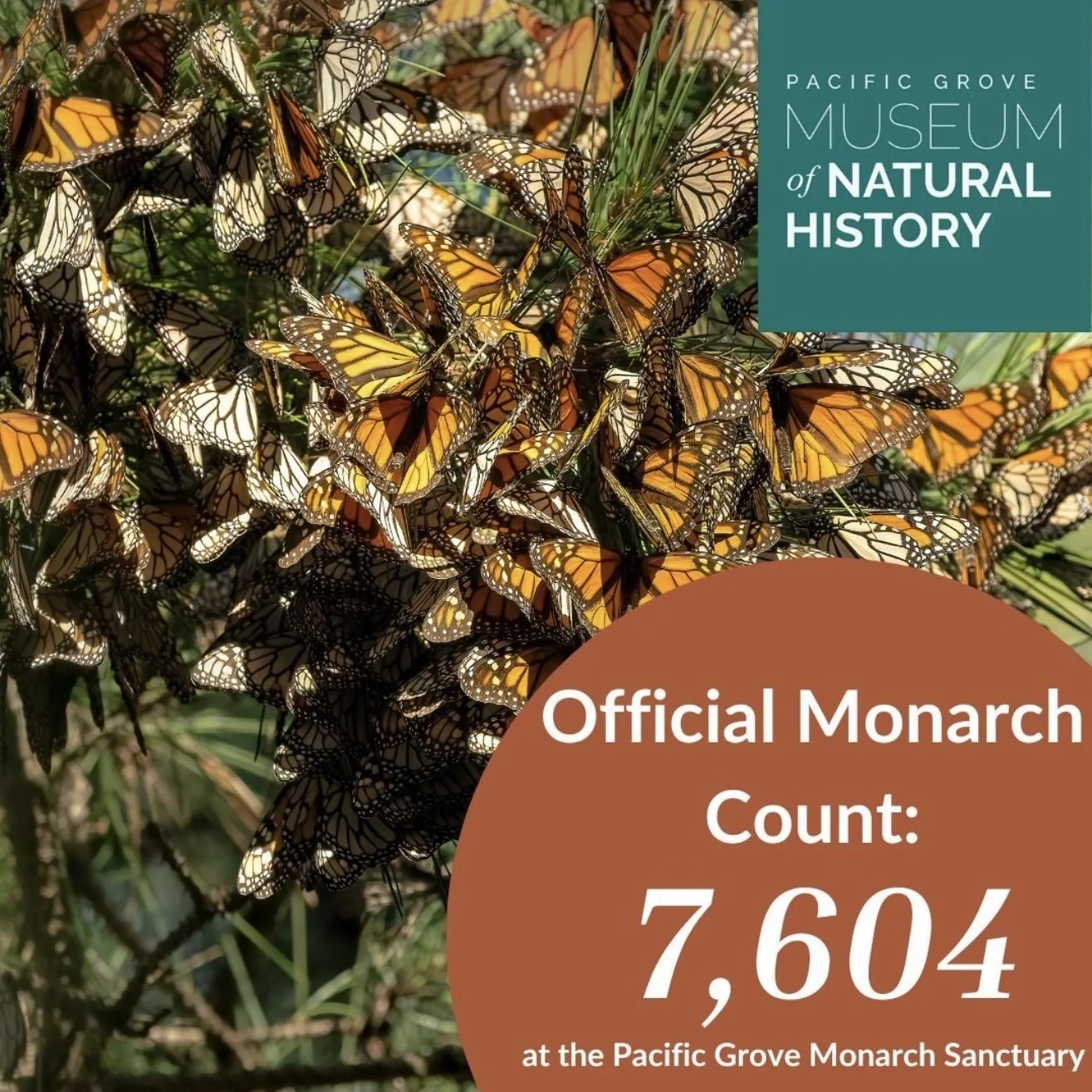
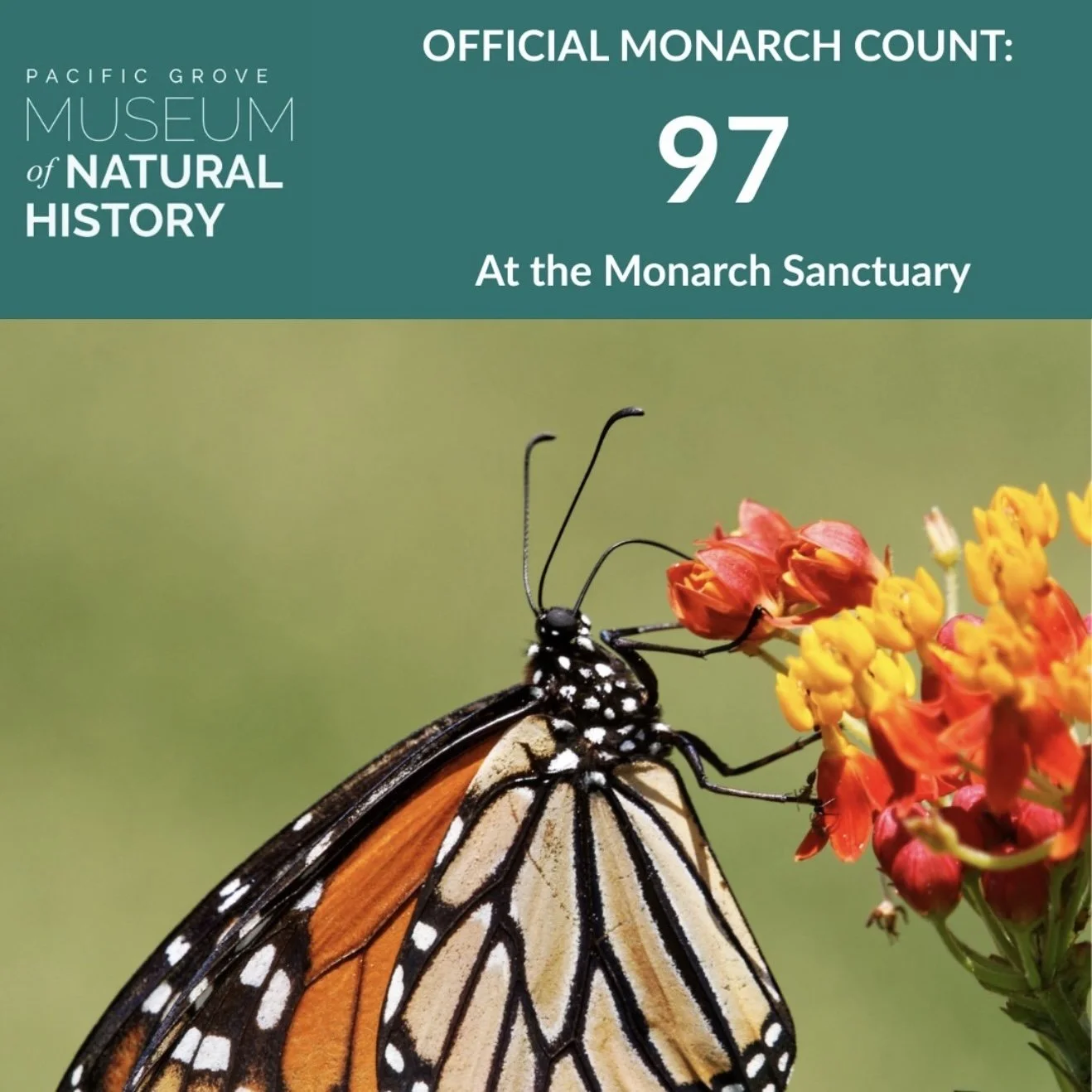
(images courtesy PG Museum of Natural History)
When Monarchs Are in Pacific Grove
Arrive: mid-October
Peak: November to January
Depart: early March
Monarchs overwinter here. They rest in wind-sheltered trees and need nectar plants through fall and winter. They do not breed in Pacific Grove, so plant nectar sources rather than milkweed.
What to plant in Fall and Winter
Fall–winter is a great time to plant California natives. Cool temperatures and seasonal rain help roots establish more easily.
Fall Bloomers (Aug–Oct)
California aster — Blooms late; plant in clumps of 3–5 for a stronger nectar signal.
California fuchsia — Thrives in full sun and dry spots; cut back in late winter for fresh growth.
Goldenrod — Showy fall spikes; give it room to spread and full sun.
Seaside daisy — Thrives on the coast; deadhead to keep blooms coming.
Coyote mint — Loves good drainage, low water, and is very pollinator-friendly.
Coastal gumplant — Handles sand and salt; sunny site and occasional pinching to keep it compact.
Winter Bloomers (Nov–Feb)
Manzanita — Needs excellent drainage; minimal summer water once established.
Pink-flowering currant — Blooms late winter; part sun to light shade and occasional deep watering the first year.
Chaparral currant — Great in dry shade; winter flowers for early pollinators.
Fuchsia-flowered gooseberry — Thorny but spectacular; plant away from paths and enjoy the hummingbirds.
Ceanothus (typically late winter into spring) — Full sun, very low water; choose a locally adapted variety for best results.
Plan and source (helpful tools)
California Coastal Native Wildflower Mix
(Mostly spring bloomers; pair with fall–winter nectar shrubs like manzanita and currants for monarchs.)
Planting tip: Group 3–5 of the same species for a stronger nectar signal. Ask for pesticide-free nursery stock. Bloom windows vary by microclimate and cultivar.
Pesticide-free yard practices
Start with non-chemical methods:
Sheet-mulch beds, hand-pull weeds, hoe, and use 2–3 inches of mulch to suppress new weeds.
Time-pruning and removals for March to September, when monarchs have departed.
Avoid “all-in-one” garden sprays.
If you must spot-treat weeds, use a minimal, salt-free mix and be careful:
Recipe: white vinegar + a small amount of liquid dish soap in a handheld sprayer.
Use: spot-spray in sunny weather, away from blooms, and avoid runoff onto bare soil.
Avoid spraying from October to March while monarchs are present.
Avoid pretreated plants: Many plants are pretreated with systemic pesticides at the seedling stage. Choose certified organic or pesticide-free plants.
Be a good neighbor
Keep wind-blocking trees during monarch season.
Tell landscapers: “Pollinator-safe only.”
Skip oak moth spraying. Healthy oaks recover; sprays harm monarchs, pollinators, and natural predators.
Get involved
Get the Sarah Epperson Safe Monarch yard sign to help spread the word.
Read the full PG Monarch Guide (in English and Spanish) for planting and yard tips.
Support the Sanctuary: visit, volunteer, donate, and help plant shelter trees.
Join the Western Monarch Count every Thanksgiving period.
Proceeds from yard signs benefit the Pacific Grove Museum of Natural History.